
- TEMPERATURE CONTROL
If food is improperly cooked or stored at unsafe temperatures, bacteria can accumulate and make people sick.
- Know and avoid the temperature danger zone – the range where bacteria grow most rapidly (41°F – 135°F).
- Cold food should be kept below 41°F.
- Frozen food should be stored below 0°F.
- Hot food should stay above 135°F.
- Check the ambient thermometers in all refrigerators and freezers to make sure they’re accurate and in the correct temperature zone.
- Ensure meats are cooked to safe internal temperatures.
- Make sure all probe thermometers are calibrated and working correctly.
- FOOD STORAGE
Where and how food is stored is equally important to avoid contamination or spoilage.
- Ensure cooked and ready-to-eat food is stored above raw food.
- Check that all food is stored at least six inches off the floor on shelves, racks, or pallets.
- Make sure all food is properly wrapped or contained to avoid drips or spills.
- Check that utensils are used in appropriate areas to reduce direct hand contact with prepared food.
- PERSONAL HYGIENE
From front to back-of-house, everyone who handles food should follow personal hygiene standards and protocols to avoid contamination.
- Ensure there is a designated sink for handwashing, with soap and hot and cold running water, that isn’t used for food prep or dishwashing.
- Make sure employees are washing their hands thoroughly for at least 20 seconds with hot water (≥100°F) before and after handling food.
- Make sure single-use gloves are available in appropriate sizes and are changed between tasks, or if dirty or torn.
- Ensure food handlers wear clean aprons and work uniforms where appropriate and keep hair covered or tied back.
- Make sure employees maintain nail lengths and properly cover cuts or wounds.
- FOOD CONTACT SURFACES
Anything that comes in contact with food has the potential to cause contamination, so regular maintenance is key.
- Make sure all food prep/food contact surfaces are regularly cleaned and sanitized with soap, water, and an approved sanitizer.
- Check for any cracked or damaged utensils that could cause contamination and discard them.
- Ensure utensils, dishes, and equipment are properly washed regularly, using either:
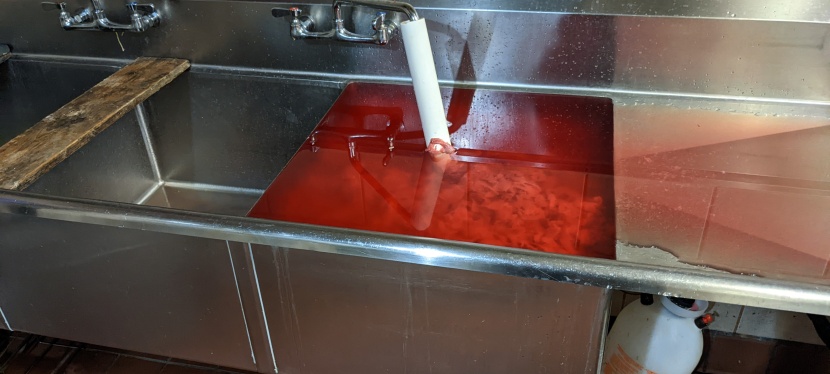
- The FDA approved three-compartment sink dishwashing method (wash, rinse, sanitize) or a mechanical dishwasher.
- Check the ice bin/machine and ensure it is being emptied and washed regularly, with standard deep cleaning at least twice a year.
- NON-FOOD CONTACT SURFACES
Just because it doesn’t come in contact with food doesn’t mean it doesn’t need to be clean.
- Make sure all floors, walls, floor drains, and ceilings are clean and in good repair.
- Make sure non-food contact equipment, such as dishwashers, ventilation, etc., is clean and in working condition.
- RESTROOMS
Whether for guests or staff, all restrooms should be kept clean and sanitized.
- Ensure bathrooms are cleaned and sanitized from top-to-bottom regularly – this includes floors, doors, walls, and ceilings.
- Make sure each bathroom is stocked with toilet paper, a garbage receptacle, hot/cold running water, soap and paper towels or a hot air dryer.
- WASTE
Restaurants produce a lot of waste – how, where, and when yours goes is important.
- Make sure all waste receptacles are leak-proof, pest-proof, and non-absorbent with tight-fitting lids.
- Ensure all solid and liquid waste is removed from food prep areas frequently and at least daily.
- A grease trap needs to be serviced every 3 months.
- PEST CONTROL
Pests are the last thing you want in your restaurant, but with so much food they can find ways in.
- Check for any evidence of pests, such as droppings or nesting sites.
- Look for and eliminate easily accessible food or water, as well as possible entry points in walls and doors, both inside and out.
- Utilize appropriate pest-control methods, such as glue traps without poisons or chemicals, particularly in food prep areas.
- Establish a contract with a licensed pest-control operator and develop an Integrated Pest Management Plan.
- EDUCATION
If your entire staff understands the importance of food safety practices, the more likely they are to self-regulate and help keep things ship-shape – and the more prepared they’ll be for an inspector’s questions.
- Make sure all staff members are trained and certified as appropriate and per local health department requirements. This means Food Handler training and Certified Food Manager training.
- Regularly ask employees job-related safety and sanitation questions.
- Don’t forget servers, to ensure they know how best to hold plates and glasses to avoid contamination.
- RECORDS
Just as you maintain a record of daily stock and sales revenue, you should be keeping track of your food safety practices.
- Check to ensure you have up-to-date, organized records of:
- All inspections, both internal and official
- Food safety training certificates
- HACCP logs
- Pest control schedules
- Grease trap tickets
- Equipment repair and maintenance
 TEXAS PUBLIC HEALTH SOLUTIONS